
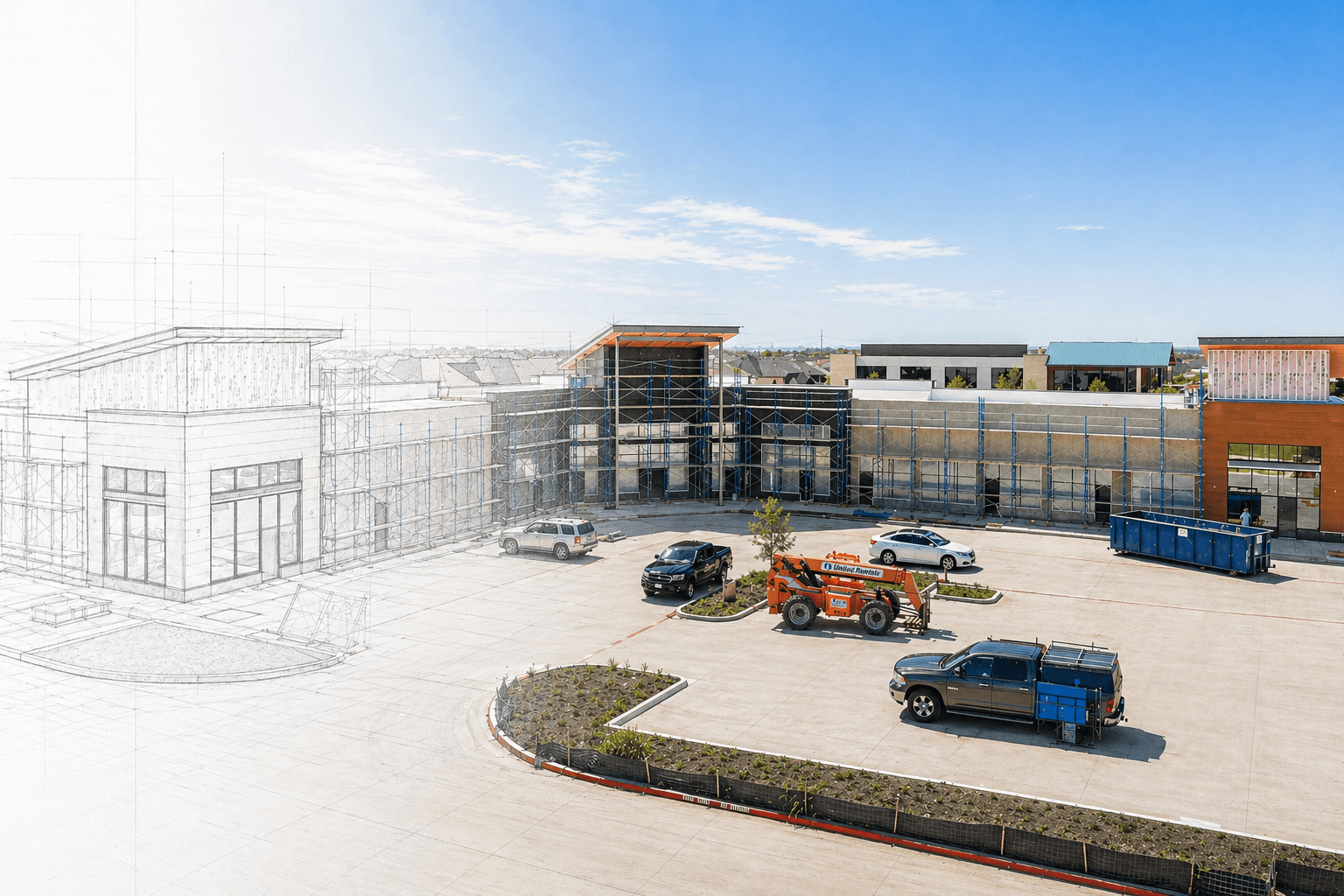

Starting a Commercial Build in DFW: 8 Things You Should Know
Discover the essential things developers should know before starting a commercial construction project in DFW.
The Dallas-Fort Worth (DFW) metroplex is one of the fastest-growing commercial construction markets in the United States.
With strong population growth, business expansion, and increasing demand for office, retail, industrial, and mixed-use spaces, developers continue to see major opportunities across North Texas.
However, launching a commercial construction project in DFW involves far more than purchasing land and starting construction.
Developers must navigate zoning regulations, building permits, engineering requirements, inspections, and compliance with both state and municipal regulations. Missing a step can lead to costly delays, rejected plans, or compliance issues.
If you're planning a commercial build in DFW, understanding the regulatory process and local requirements early on can save time, money, and stress.
Below are the key factors every developer should consider before breaking ground.
1. Understand Local Zoning Regulations
Before purchasing land or planning a commercial development, verify that the property's zoning designation allows the intended use.
Zoning laws regulate how land can be used within a city or county to ensure orderly growth.
For developers, this means:
- Confirming the zoning classification (Retail, Industrial, Office, or Mixed-Use).
- Checking setback requirements and lot coverage limits.
- Reviewing parking minimums and height restrictions.
Pro Tip: Cities like Dallas and Fort Worth offer online zoning verification tools. Failing to verify compatibility can result in denied permits or forced, costly redesigns.
2. Secure the Required Building Permits
A commercial building permit is the most critical hurdle before breaking ground. In DFW, you often need a "Master Permit" followed by specific trade permits:
- Building & Structural
- Electrical, Mechanical, & Plumbing (MEP)
- Signage & Fire Systems
While permitting efficiency in North Texas has improved, approvals for complex projects can still take several months.
Partnering with a contractor who understands the local municipal systems can significantly shave weeks off your timeline.
3. Prepare Detailed, Sealed Construction Plans
Texas law is strict regarding professional oversight.
For most commercial builds, especially those exceeding 5,000 square feet, plans must be sealed by a Texas-licensed professional engineer or architect.
Your submission package must include:
- Site and Landscaping Plans
- Structural and MEP (Mechanical, Electrical, Plumbing) plans
- Utility connections and parking layouts
Incomplete or inaccurate plans are the #1 reason for permit delays in DFW.
4. Plan for Accessibility (ADA & TAS) Compliance
In Texas, projects with construction costs exceeding $50,000 must register with the Texas Department of Licensing and Regulation (TDLR) for architectural barrier compliance.
This ensures your build meets both the federal Americans with Disabilities Act (ADA) and the Texas Accessibility Standards (TAS).
Moreover, key considerations include wheelchair ramps, restroom clearances, and proper door widths. Ignoring this leads to expensive modifications during the final inspection phase.
5. Account for Infrastructure and Site Requirements
Beyond the four walls of the building, the site itself requires heavy coordination:
- Stormwater Drainage: Crucial in North Texas to manage heavy seasonal rains.
- Fire Safety: Fire hydrant placement, fire lanes, and emergency vehicle access.
- Utility Connections: Coordinating with local providers for water, sewer, and electrical grids.
6. Obtain a Certificate of Occupancy (CO)
Your project isn't "finished" when the last nail is driven. A commercial property cannot legally operate until it receives a Certificate of Occupancy.
City inspectors will conduct a final walkthrough to verify structural integrity, fire safety, and code adherence.
Without this document, tenants cannot move in, and businesses cannot open their doors.
7. Work With an Experienced Commercial Contractor
The DFW market moves fast. An experienced contractor in Texas acts as your boots-on-the-ground partner to:
- Coordinate between architects, engineers, and city planners.
- Manage tight project timelines to avoid interest-carry costs.
- Use advanced project management technology to provide real-time updates.
At TX Sparks Construction, we leverage our in-house engineering insights and advanced construction project management software to ensure your project stays on track through every municipal milestone.
8. Budget for Contingencies
Even the best-laid plans encounter surprises. We recommend budgeting a contingency fund for:
- Material cost fluctuations in the North Texas market.
- Weather disruptions (common in DFW spring seasons).
- Permit revisions requested by the city.
Final Thoughts
Starting a commercial build in DFW is a high-reward opportunity, but the complexity of the "Pre-Construction" phase can be daunting.
By focusing on zoning, compliance, and expert partnerships early on, you can bring your project to life efficiently and profitably.
Build Your Next Project With TX Sparks Construction
At TX Sparks Construction, we specialize in ground-up commercial builds across the DFW metroplex.
From retail spaces in Flower Mound to industrial facilities in Dallas, we bring a "developer's mindset" to the general contracting process.
Contact us today to discuss your DFW project, or call us directly at 469-598-2558
Let's build smarter, faster, and with confidence.
FAQs
1. How long does it typically take to get a commercial construction permit in DFW?
Approval timelines vary depending on project size and complexity. Some permits may take several weeks, while larger or more complex developments can take several months due to plan reviews and revisions.
2. Do developers need environmental studies before building in DFW?
Certain projects may require environmental reviews, particularly if the land contains wetlands, floodplains, or protected habitats. Local planning departments may require environmental documentation during the approval process.
3. Can commercial projects begin before permits are approved?
No. Construction cannot legally begin until the required permits are issued. Starting work without permits can result in fines, stop-work orders, and additional inspections.
4. What professionals are typically required for a commercial construction project?
Most commercial projects require a team that includes architects, structural engineers, MEP engineers, general contractors, and sometimes civil engineers and environmental consultants.
Disclaimer: This article is provided for general educational and informational purposes only and does not constitute professional, legal, financial, or engineering advice. While TX Sparks Construction makes every effort to keep this content accurate and current, we make no warranties as to its completeness, accuracy, or reliability. Construction codes, regulations, and requirements vary by location and project and are subject to change. Any action you take based on this information is strictly at your own risk. For guidance specific to your project, please consult a qualified professional or contact our team directly.