

Case Study
The Hidden Cost of Choosing the Lowest-Bid General Contractor
Learn how choosing the lowest-bid general contractor led to unexpected delays, change orders, and higher project costs, and what owners can do differently.
One of the most common mistakes I see among real estate developers in Texas and property owners is focusing too heavily on the construction bid while underestimating the financial impact of project delays.
Let's look at a real-world example.
Project Assumptions
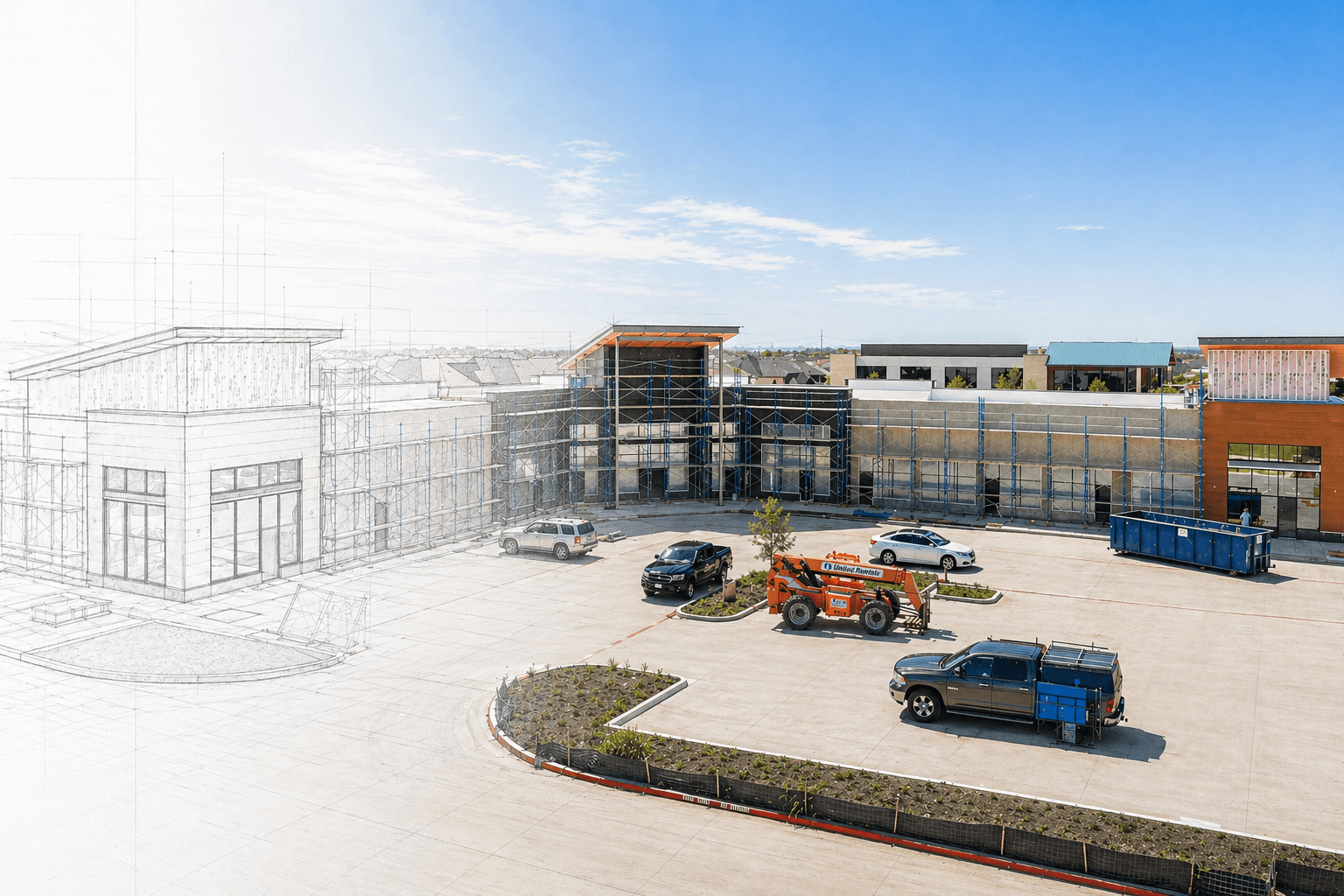
Retail Strip Center: 20,000 SF
Hard Construction Cost: $4,000,000
Soft Costs (Design, Engineering, Permits, etc.): $500,000
Land Cost: $1,500,000
Total Project Cost: $6,000,000
Assume the developer finances 60% of the project:
Loan Amount: $3,600,000
Interest Rate: 8%
Annual Interest Expense: Approximately $288,000
Additional annual carrying costs:
Property Taxes (based on $2.5M valuation at 2.5%): $65,000
Insurance, HOA, Liability, Maintenance, and Miscellaneous Expenses: Approximately $100,000
Total Annual Carrying Cost
Interest Expense: $300,000
Property Taxes: $65,000
Insurance, HOA & Other Expenses: $100,000
Total Annual Carrying Cost: Approximately $465,000 to $500,000 per year
For example: A 20,000 SF project: $25 per square foot per year or approximately $2.08 per square foot per month.
What Happens When the Project Is Delayed?
If the project completion is delayed by just one year, the owner incurs an additional $500,000 in carrying costs or $25 per square foot of additional cost.
This cost is often much higher than the savings achieved by selecting the lowest construction bid.
For example, many developers spend months negotiating a lower contract price with a less-qualified contractor to save a few dollars per square foot.
However, if that contractor delays the project by 12 months, the carrying costs alone can exceed the original savings several times over.
The Hidden Opportunity Cost
The financial impact doesn't stop there.
When a project is delayed:
Tenant move-ins are delayed.
Rental income is postponed.
Loan payoff is delayed.
Investor returns are delayed.
Business owners cannot open their doors.
Leasing momentum slows.
Market opportunities may be missed entirely.
In many cases, the opportunity cost is greater than the carrying cost itself.
Don't Forget Change Orders and Legal Expenses
Project delays frequently lead to additional costs such as:
Change Orders
Extended General Conditions
Consultant Fees
Legal Expenses
Lender Extension Fees
Mechanic's Liens
Disputes and Claims
These costs can significantly increase the overall cost per square foot and further reduce project profitability.
Key Takeaway
As developers and property owners, we should not evaluate contractors based solely on the lowest bid.
Instead, we should prioritize:
Proven track record
Ability to finish on time
Financial stability
Quality control processes
Project management capabilities
Transparency and communication
The best contractor is not always the cheapest contractor.
A contractor who consistently delivers projects on time can save a developer far more money than any discount negotiated upfront.
Remember: In commercial real estate development, time is money. Every month of delay has a direct cost, and every year of delay can dramatically impact project profitability. Choose your general contractor in Texas based on their ability to successfully deliver the project, not simply on their price.
Related Case Studies

Why the Lowest Bid Can Become the Most Expensive Decision
The lowest construction bid can lead to higher long-term project costs through unexpected change orders, schedule delays...
Case Study
How TX Sparks Construction Transformed a Ground-Up Daycare Development
TX Sparks Construction transformed a ground-up daycare development through technology, transparent communication, and co...
Case Study
Shoreline Plaza Case Study: Re-Engineering an 8,000 Sq Ft Classical Structure
When we acquired Shoreline Plaza as part of a larger subdivision purchase, the 4-acre commercial development site came w...